Helping children learn to read becomes easier when they can see clear word patterns. For beginning readers, one of the most effective tools is the use of word family charts. These simple reading materials help children recognize similar endings, build new words, and improve decoding skills in a fun and easy way.
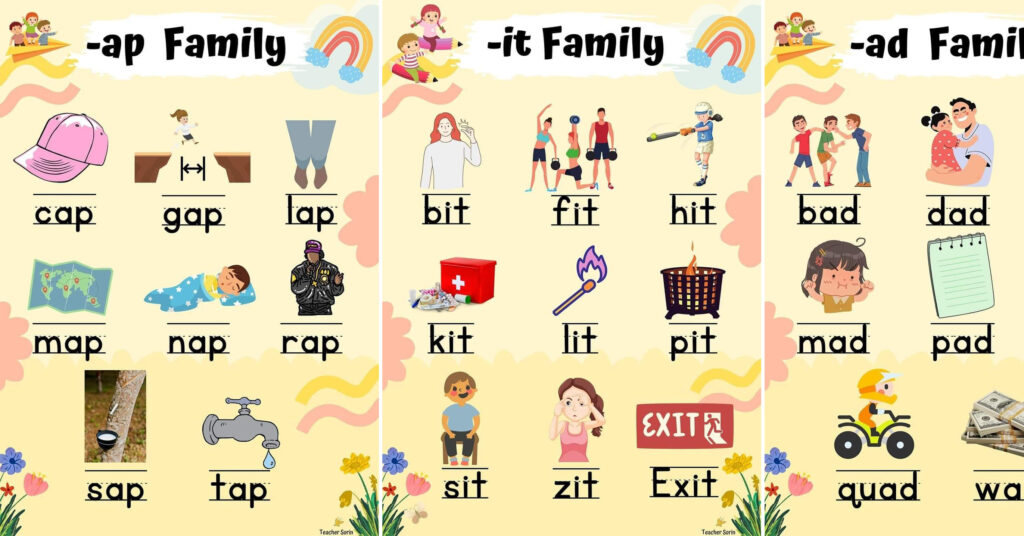
The reading materials in your sample focus on common CVC word families such as -ap, -it, and -ad. These include words like cap, map, nap, bit, fit, hit, bad, dad, and sad. Because the words follow a pattern, children can read them more easily. Once they know one word in the family, they can often read the others with less effort.
This kind of practice is very helpful for preschool learners, kindergarten pupils, Grade 1 students, and children who need extra reading support. It is also useful for parents, teachers, tutors, and homeschool families who want easy and printable resources for daily reading practice.
If you are planning to post educational content on your website, word family charts are a smart choice. They are beginner-friendly, practical, and highly useful for early reading instruction.
What Are Word Families?
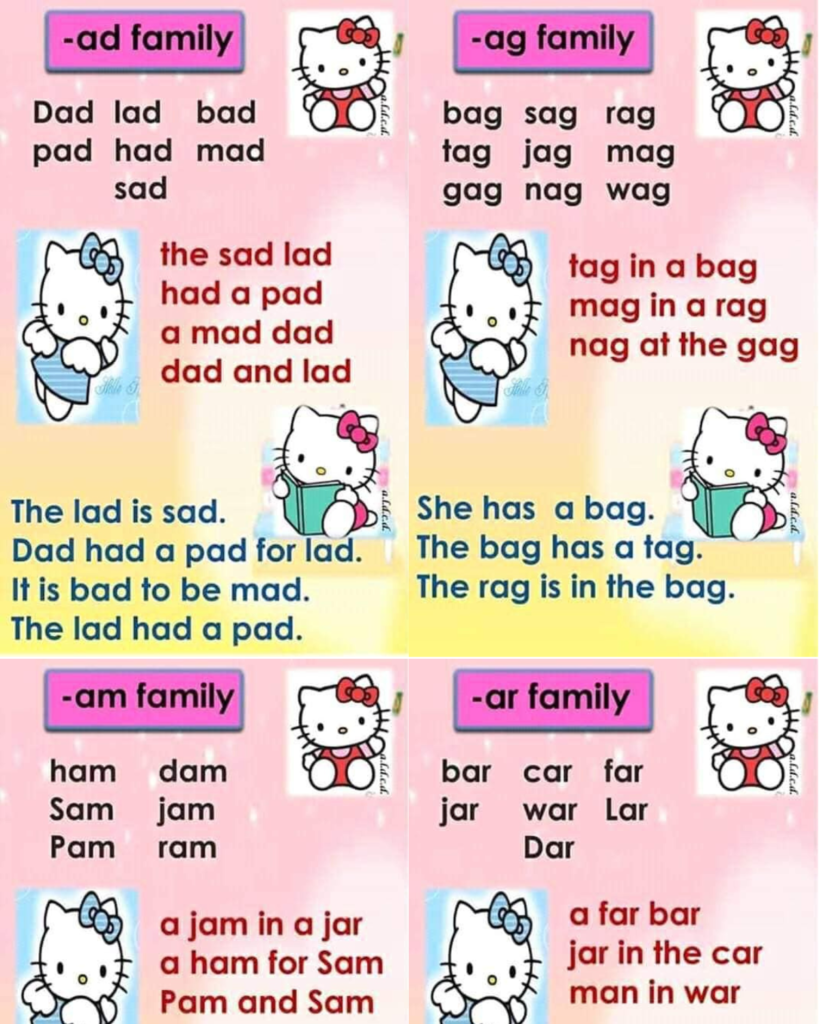
Word families are groups of words that share the same ending sound or spelling pattern. For example, in the -ap family, children may read words like cap, gap, lap, map, nap, rap, sap, and tap. In the -it family, they may read bit, fit, hit, kit, lit, pit, and sit. In the -ad family, they may read bad, dad, lad, mad, pad, and sad.
This pattern-based approach helps children see that many words are connected. Instead of treating every word as completely new, they begin to notice that changing the first letter can create a new word. This makes reading feel easier and more logical.
Word family practice is often used in phonics instruction because it helps children develop strong decoding skills. It also improves word recognition, spelling, and reading confidence.
Why Word Families Matter in Early Reading
Word families matter because they help children understand how words work. A young learner who can read cap may soon realize that map and tap follow the same pattern. This discovery is important because it gives the child a reading strategy.
Instead of guessing, the child begins to use patterns. That is a major step in reading development. Once children understand that words can be grouped by common endings, they become faster and more accurate readers.
Word family practice also reduces frustration. Reading feels less overwhelming when the child is working with familiar patterns. This creates more success, and success helps children stay motivated.
In early reading, confidence is just as important as skill. A child who feels successful is more likely to keep practicing and improving.
Why These Reading Materials Are Effective
The materials you shared are effective because they are clear, visual, and easy to follow. Each page focuses on one word family at a time. That makes the learning target simple and direct.
The use of pictures is also very helpful. Children can connect the printed word with a visual clue. For example, seeing a cap, map, or tap beside the word makes it easier to understand and remember. Picture support is very useful for early learners because it strengthens both vocabulary and comprehension.
Another strength of these worksheets is repetition. Repetition is essential in beginning reading. When children see the same word ending again and again, they begin to recognize it automatically. This helps build fluency over time.
The layout also works well for children. The words are large, spaced clearly, and easy to scan. That makes the material more inviting and less intimidating.
Word Family Charts for Kids
This material is shared solely for educational purposes. All credit belongs to its rightful owner, Teacher Sorin.