Reading is one of the most important skills a child can learn. It opens the door to language development, better communication, and stronger academic growth. For young learners, one of the best ways to build reading confidence is through sight words. That is why many teachers and parents use Dolch sight words as part of daily reading practice.
Dolch sight words are common words that children see often in books, worksheets, and classroom materials. These words usually appear again and again in simple reading texts. Because of this, children benefit from learning to recognize them quickly. When a child can read these words with ease, reading becomes smoother, faster, and less stressful.
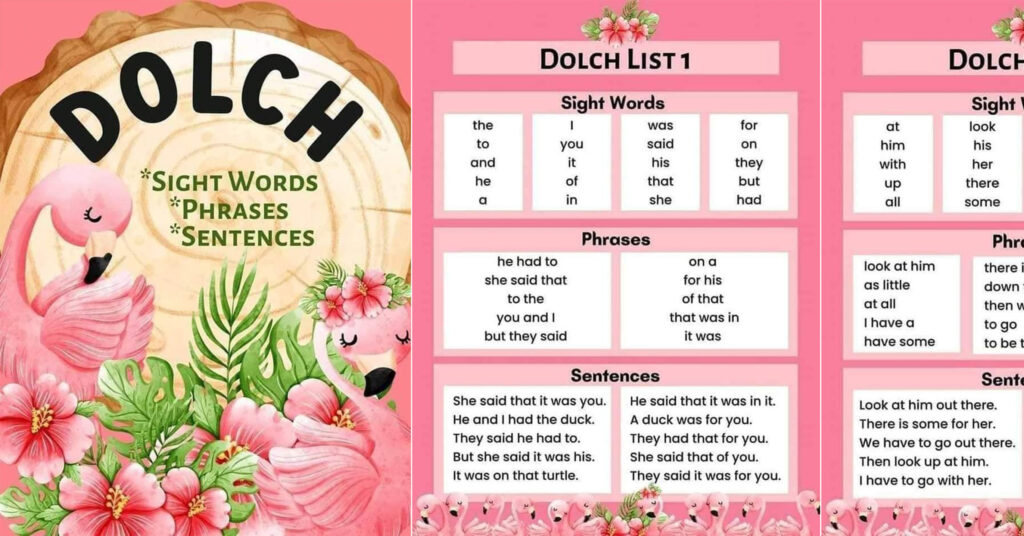
In this reading material, we focus on Dolch sight words, short phrases, and easy sentences. This approach helps children move step by step. First, they read the word. Next, they read the phrase. Then, they read the full sentence. As a result, they do not just memorize words. They also learn how words work together in real reading.
What Are Dolch Sight Words?
Dolch sight words are a list of frequently used words that young children should learn to recognize by sight. Dr. Edward William Dolch created this list to support early reading instruction. These words include simple but essential terms such as “the,” “and,” “you,” “it,” and “was.”
Many of these words cannot always be sounded out easily by beginning readers. Therefore, children are encouraged to remember them as whole words. Once they know these common words, they can read many beginner-level texts with more confidence.
Dolch sight words are often grouped by level. These levels usually match the reading stage of the child. For example, preschool, kindergarten, first grade, second grade, and third grade all have their own set of words. This makes it easier for parents and teachers to choose the right materials for each learner.
Why Dolch Sight Words Matter
Sight words play a major role in early reading success. When children know common words instantly, they spend less time trying to decode every single word. Instead, they can focus on understanding the sentence and enjoying the story.
This is important because early readers often lose confidence when reading feels too difficult. However, when they can quickly identify familiar words, they begin to feel successful. That success motivates them to keep reading.
Dolch sight words also support other language skills. They help children improve spelling, sentence building, speaking, and writing. In addition, they strengthen memory and word recognition. These are all useful skills for school and everyday learning.
A Simple Way to Teach Reading Materials
One of the best ways to teach Dolch sight words is to present them in three parts: words, phrases, and sentences. This method is easy to follow and very effective for young learners.
First, children study the individual sight words. At this stage, they become familiar with the appearance of each word. Then, they read short phrases using those same words. This helps them understand how words connect. After that, they read simple sentences that include the target words. This final step improves fluency and comprehension.
Because of this clear sequence, children do not feel overwhelmed. They move from easy to more challenging tasks in a natural way. As a result, they build confidence with every lesson.
Benefits of Using Words, Phrases, and Sentences
Reading materials that include words, phrases, and sentences offer several benefits. Most importantly, they allow children to practice reading in a complete and meaningful way.
When a child reads a single word, they learn recognition. When they read a phrase, they practice grouping words together. When they read a sentence, they begin to understand meaning and flow. This layered practice improves both accuracy and fluency.
Another benefit is repetition. Repetition is helpful for early readers because it strengthens memory. When children see the same sight words in different forms, they learn them more quickly. For example, a child may first read the word “look,” then the phrase “look at him,” and later the sentence “Look at him out there.” This repeated exposure supports lasting learning.
How These Reading Materials Help Young Learners
These reading materials are especially useful for preschoolers, kindergarten pupils, and beginning readers. They are also helpful for struggling readers who need more practice with basic words.
Simple reading pages work well because they reduce distractions. Children can focus on a small group of target words at a time. In addition, short phrases and sentences make reading feel manageable. This is important for learners who are still developing attention and confidence.
Parents can use these materials at home during daily practice. Teachers can use them in the classroom for guided reading, seatwork, or review. Homeschooling families can also include them in their language lessons. Since the format is easy to understand, it fits many learning environments.
Dolch Sight Words for Early Readers