Teaching children to read becomes easier when they can recognize patterns in words. One helpful way to build this skill is through consonant blends. These word patterns help young learners hear how two consonants work together at the beginning of a word. When children practice blends again and again, they become more confident in decoding, pronunciation, and word recognition.
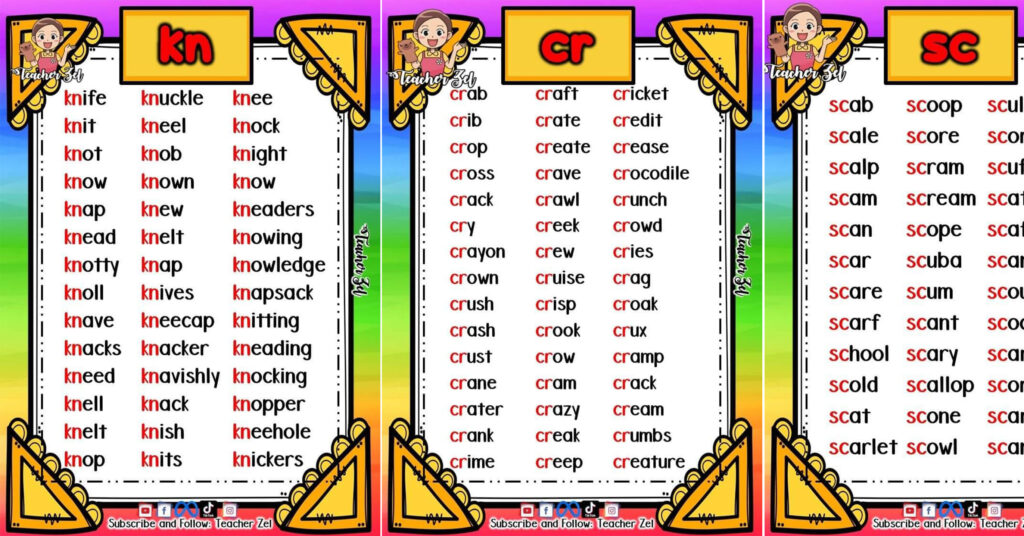
The sample materials you shared focus on blend patterns such as kn, cr, and sc. These printable word lists are useful because they group similar words together. Instead of reading random vocabulary, children practice a clear sound pattern in one lesson. This makes reading more organized and less overwhelming.
These materials are helpful for kindergarten learners, Grade 1 students, Grade 2 pupils, struggling readers, and children who need extra phonics practice. They are also useful for parents, teachers, tutors, and homeschool families who want ready-to-use printables for home and classroom learning.
If you plan to post educational resources on your website, consonant blend word lists are a strong choice. They are easy to use, practical for daily reading lessons, and valuable for early literacy development.
What Are Consonant Blend Word Lists?
Consonant blend word lists are reading materials that group words by the same beginning blend. A consonant blend happens when two consonants appear together and both sounds are heard, even if one sound may be softer in some words.
Examples from your sample include:
- kn words like knife, knit, knot, know, and knee
- cr words like crab, crib, crop, cross, and crack
- sc words like scab, scale, scalp, scam, and scan
These lists help children focus on one blend pattern at a time. This improves sound recognition and makes it easier to compare words. Once a learner understands the pattern, reading similar words becomes easier.
Why Consonant Blends Matter in Early Reading
Consonant blends matter because they are common in English words. Children will often see words with blends in books, worksheets, and classroom reading activities. If they do not understand how these blends work, reading may feel harder than it should.
Blend practice helps children:
- recognize beginning sound patterns
- decode new words more accurately
- improve pronunciation
- build stronger phonics skills
- read with more confidence
When children know how to read blend words, they are better prepared for stories, sentences, and longer passages. This makes blend instruction an important part of early reading development.
Why These Reading Materials Are Effective
The sample materials you shared are effective because they are simple and focused. Each page highlights only one blend pattern. This keeps the lesson clear for the learner.
The words are also arranged in a neat and readable way. Children can scan the page easily and see the repeated blend again and again. This repeated exposure supports memory and pattern recognition.
Another reason these materials work well is that they include both short and longer words. This allows children to begin with easier examples and then move toward more advanced vocabulary. A learner may start with a word like crab and later read crater or creature. This gradual increase helps build skill without too much pressure.
Consonant Blend Word Lists
This material is shared solely for educational purposes. All credit belongs to its rightful owner, Teacher Zel.