Teaching children to read becomes easier when they can recognize sound patterns in words. One of the most important phonics skills for young learners is learning consonant blends. These blends appear in many common English words, so children need regular practice with them. That is why consonant blend worksheets for kids are very useful for reading instruction at home and in the classroom.
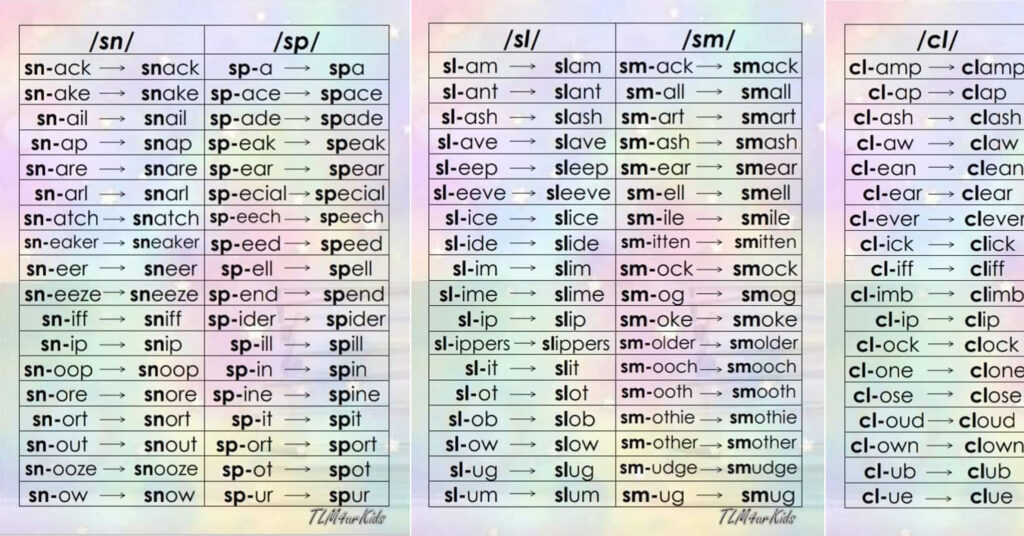
The sample materials you shared are excellent for blend practice. They focus on common beginning blends such as sn, sp, sl, sm, cl, and cr. Each page gives many example words that help children see how the same blend works in different words. This kind of repeated and organized practice is very helpful for beginning readers.
These printable materials are useful for kindergarten pupils, Grade 1 students, Grade 2 learners, struggling readers, and children who need extra phonics support. They are also helpful for parents, teachers, tutors, and homeschool families who want easy reading resources that can be printed and used right away.
If you plan to post educational resources on your website, consonant blend worksheets are a strong choice. They are practical, beginner-friendly, and highly valuable for phonics development.
What Are Consonant Blends?
Consonant blends happen when two consonants appear together at the beginning or end of a word, and each consonant sound can still be heard. For example, in the word snap, the s and n sounds blend together, but both sounds are still present.
Common beginning blends include:
- sn as in snack and snake
- sp as in space and spell
- sl as in slide and sleep
- sm as in smile and small
- cl as in clap and clock
- cr as in crab and crayon
Children need to practice these patterns often because blends are common in many reading materials. Once learners understand them, reading becomes smoother and more accurate.
Why Consonant Blends Matter in Reading
Consonant blends matter because they are part of many everyday English words. A child who understands blends can decode more words with greater confidence. This helps with reading fluency, word recognition, and spelling.
When children do not know blend patterns, they may stop too often while reading. They may try to sound out each letter separately or guess the word. However, when they know how a blend works, they can read more naturally.
Blend practice helps children:
- hear sound patterns more clearly
- decode unfamiliar words
- improve pronunciation
- build stronger phonics knowledge
- gain more confidence while reading
This makes consonant blend instruction an important step in early literacy.
Why These Sample Materials Are Effective
The materials you shared are effective because they are simple, organized, and focused. Each page highlights two blend patterns at a time, which keeps the lesson clear and manageable. Children are not overwhelmed by too many patterns at once.
The format also helps learners compare words easily. For example, on one page they can practice sn words and sp words side by side. On another page they can compare sl and sm, and on another they can study cl and cr. This encourages careful sound awareness.
Another strength is repetition. Each page gives many examples of the same blend. This repeated exposure helps children remember the pattern and read it more quickly in the future.
Consonant Blend Worksheets
This material is shared solely for educational purposes. All credit belongs to its rightful owner, TLM 4ur Kids.