Teaching children how to read becomes easier when lessons are short, clear, and built around simple sound patterns. For beginning readers, one of the most effective ways to build confidence is through short vowel reading passages. These materials help children practice basic phonics, common sight words, and easy sentence reading in one simple activity.
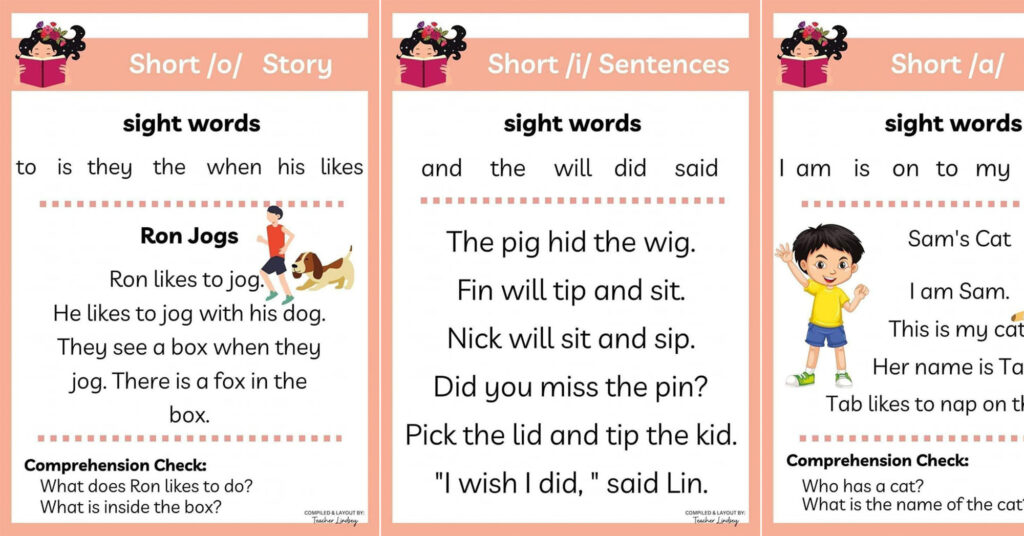
The sample materials you shared are excellent examples of early reading practice. They include short /a/, /i/, and /o/ reading texts with sight words and simple comprehension questions. This format is very helpful for young learners because it combines several important skills at once. Children practice decoding short vowel words, reading sight words in context, and answering easy questions after reading.
These printable reading passages are useful for preschool learners, kindergarten pupils, Grade 1 students, and children who need remedial reading support. They are also helpful for parents, teachers, tutors, and homeschool families who want beginner-friendly resources for home and classroom use.
If you plan to post educational printables on your website, short vowel reading passages are a strong choice. They are practical, easy to use, and highly valuable for early literacy instruction.
What Are Short Vowel Reading Passages?
Short vowel reading passages are short texts built around words with basic vowel sounds such as a, i, and o. These passages usually include simple CVC words, high-frequency sight words, and short sentences that young children can read with support.
Examples of short vowel words include:
- cat, mat, nap, Sam, Tab for short a
- pig, hid, wig, pin, sit, sip for short i
- Ron, jog, dog, fox, box for short o
These passages work well because they let children practice sound patterns in a meaningful way. Instead of reading isolated words only, learners see the words inside real sentences and short stories. This improves both reading accuracy and understanding.
Why Short Vowel Practice Matters
Short vowel sounds are one of the first phonics skills children need to master. They appear in many simple words that beginning readers encounter early. If children can read short vowel words well, they are better prepared for sentence reading, story reading, and spelling practice.
Short vowel practice helps children:
- hear and identify common vowel sounds
- decode simple CVC words
- blend letters more accurately
- read short texts with more confidence
Without a strong foundation in short vowels, reading may feel harder than it should. However, when children get repeated practice with simple vowel-based words, reading becomes more manageable and more enjoyable.
Why These Reading Materials Are Effective
The materials in your sample are effective because they follow a strong early-reading structure. Each page begins with sight words, then moves into a short passage or short sentences, and ends with a comprehension check.
This sequence is useful for several reasons. First, sight words prepare the child for the text. When children preview words like I, am, is, on, the, will, did, when, and his, they are more ready to read the passage smoothly. Second, the story or sentence set focuses on one short vowel sound, which keeps the reading target clear. Third, the comprehension questions help children think about meaning, not just pronunciation.
The layout also supports readability. The print is large, the sentences are short, and the page looks clean. This helps reduce stress for beginning readers.
Short Vowel Reading Passages
This material is shared for educational purposes only, with full credit given to its rightful owner, Teacher Lindsey.