Reading is one of the most important skills children develop in their early school years. It helps them understand words, ideas, and meaning. More importantly, it teaches them how to think, answer questions, and express themselves clearly. Because of this, many parents and teachers look for simple and useful reading materials that children can enjoy and understand.
One helpful resource for young learners is Filipino reading comprehension passages with questions. These materials are designed to help children read short texts and answer easy comprehension questions after reading. This method improves both reading fluency and understanding. It also gives children a chance to practice thinking about what they read.
The reading materials in these samples are ideal for children who are learning to read in Filipino. They use short passages, simple vocabulary, and direct questions. This format is helpful for early grade school learners because it keeps reading practice easy, clear, and manageable. At the same time, it develops an important habit. Children learn that reading is not only about saying words aloud. Reading is also about understanding the message of the text.
What Are Filipino Reading Comprehension Passages?
Filipino reading comprehension passages are short texts written in Filipino and followed by guide questions. These passages usually talk about simple topics that children can easily understand. Common themes include family, school, home, friends, and daily life.
After reading the short passage, the learner answers basic questions about it. These questions help check if the child understood the details of the text. In many cases, the questions ask about names, places, actions, numbers, or descriptions found in the passage.
This kind of material is very useful because it combines two important reading skills. First, the child practices reading the text. Second, the child practices comprehension by answering questions. As a result, the child becomes more active and attentive while reading.
Why Reading Comprehension Is Important
Reading comprehension is an essential part of literacy. A child may be able to read the words on the page, but true reading skill includes understanding what those words mean together. This is why comprehension activities are so important in early education.
When children answer questions after reading, they learn to focus on details. They begin to notice who the story is about, what happened, where it happened, and why it matters. These simple thinking skills build a strong academic foundation.
Comprehension also helps children become better learners in other subjects. They need comprehension skills in science, math, social studies, and even daily classroom instructions. If a child can understand short reading passages well, that child is more prepared for future learning tasks.
Why These Materials Work for Young Learners
Short Filipino reading passages with questions are effective because they match the needs of beginning and developing readers. They are not too long, and they do not use difficult vocabulary. This makes them less intimidating for children.
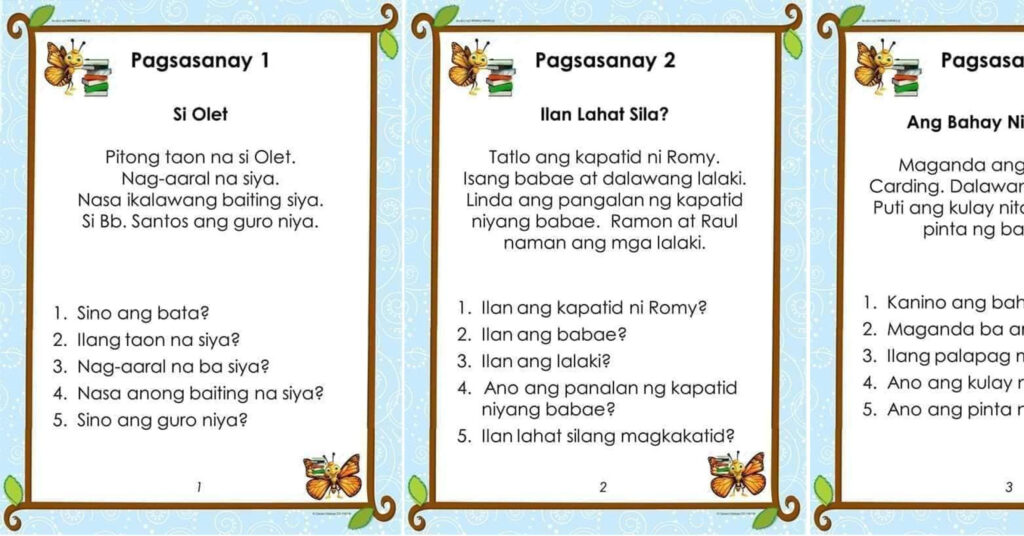
The passages are also focused on one simple topic at a time. For example, one passage may be about a child named Olet, another may be about siblings, and another may describe a house. Since the topic is clear, children can understand the content more easily.
The comprehension questions are also direct. They do not confuse the learner. Instead, they guide the child to look back at the passage and find the answer. This helps strengthen attention, memory, and reading habits.
Filipino Reading Comprehension Passages with Questions for Grade School Learners