Learning to read becomes easier when children are given simple, clear, and structured materials. For young learners, one of the best ways to build reading confidence is to start with letters, vowel sounds, syllables, and easy word patterns. That is why Madaling Paraan ng Pagbasa materials are very helpful for early reading practice.
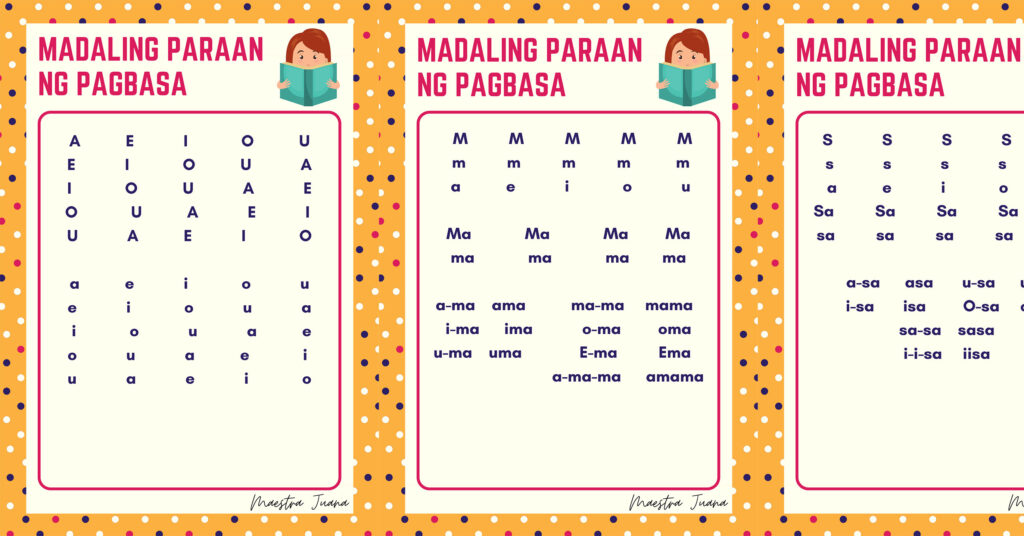
The reading materials in your sample focus on the basic building blocks of Filipino reading. They begin with the vowels A, E, I, O, U, then move to consonant-and-vowel combinations such as Ma, me, mi, mo, mu and Sa, se, si, so, su. After that, children are introduced to simple word blending such as a-ma, ma-ma, a-sa, and i-sa. This step-by-step structure helps children read in a natural and manageable way.
These printable reading materials are useful for preschool learners, kindergarten pupils, Grade 1 students, and children who need remedial reading support. They are also helpful for parents, teachers, tutors, and homeschool families who want easy resources for daily reading practice.
Because the lessons move from sounds to syllables and then to simple words, children do not feel overwhelmed. Instead, they gain confidence little by little. This makes the materials practical, beginner-friendly, and very effective for early literacy development.
What Is “Madaling Paraan ng Pagbasa”?
Madaling Paraan ng Pagbasa is a simple approach to teaching children how to read by starting with the most basic sound patterns. Instead of giving long passages right away, this method begins with vowels, letter sounds, syllable combinations, and easy word blending.
For example, children first read the vowels in sequence. Then they practice consonant-vowel combinations like Ma, me, mi, mo, mu and Sa, se, si, so, su. After that, they begin reading short blended words such as ama, mama, isa, usa, and similar simple forms.
This method works well because it teaches reading one small step at a time. Young learners need this kind of structured practice. When the lesson is simple and repetitive, reading feels less difficult and more successful.
Why Basic Reading Materials Matter
Children need a strong foundation before they can read full sentences and stories. If they do not understand basic sounds and syllables, they may struggle with more advanced reading tasks later on.
That is why beginner reading materials are so important. They help children recognize vowels, identify consonants, blend syllables, and read short words correctly. These are the early skills that support future reading fluency and comprehension.
When children master basic word patterns, they are better prepared for phrases, sentences, and short passages. In other words, strong basic reading practice creates a stronger path toward independent reading.
Why These Reading Materials Are Effective
The materials you shared are effective because they are clear, focused, and easy to follow. Each page teaches one small part of reading at a time.
The first page highlights the vowels in both uppercase and lowercase form. This is very useful because children need repeated exposure to vowels before they can blend words smoothly. The next pages introduce the consonants M and S with vowel combinations. This teaches children how consonants and vowels work together in Filipino syllables.
The words are also presented in a simple progression. Children see the sound, then the syllable, then the blended form. This is a very practical sequence for beginning readers because it reduces confusion and supports mastery.
Another reason these materials work well is repetition. Repetition is important in early reading. When children read the same sound pattern more than once, they begin to recognize it faster and read it more confidently.
Benefits of Using These Printable Reading Materials
These reading materials support many important early literacy skills.
Improves vowel recognition
Children become familiar with the five Filipino vowels, both in uppercase and lowercase.
Builds syllable blending skills
Learners practice combining consonants and vowels to form syllables such as ma and sa.
Supports early word reading
Children begin reading short Filipino words made from easy sound patterns.
Develops reading confidence
Because the materials are simple, children feel more successful while practicing.
Helps with pronunciation
Repeated reading helps children say sounds and syllables more clearly.
Prepares children for more advanced reading
Once children master these basics, they are better ready for phrases, sentences, and stories.
Madaling Paraan ng Pagbasa
This material is shared solely for educational purposes. All credit belongs to its rightful owner, Maestra Juana.