Teaching children to read becomes easier when lessons are clear, patterned, and easy to follow. One of the most important phonics skills for young learners is understanding long vowel sounds. When children learn how long vowels work in words, phrases, and short passages, they become more confident readers. They also improve decoding, fluency, and comprehension.
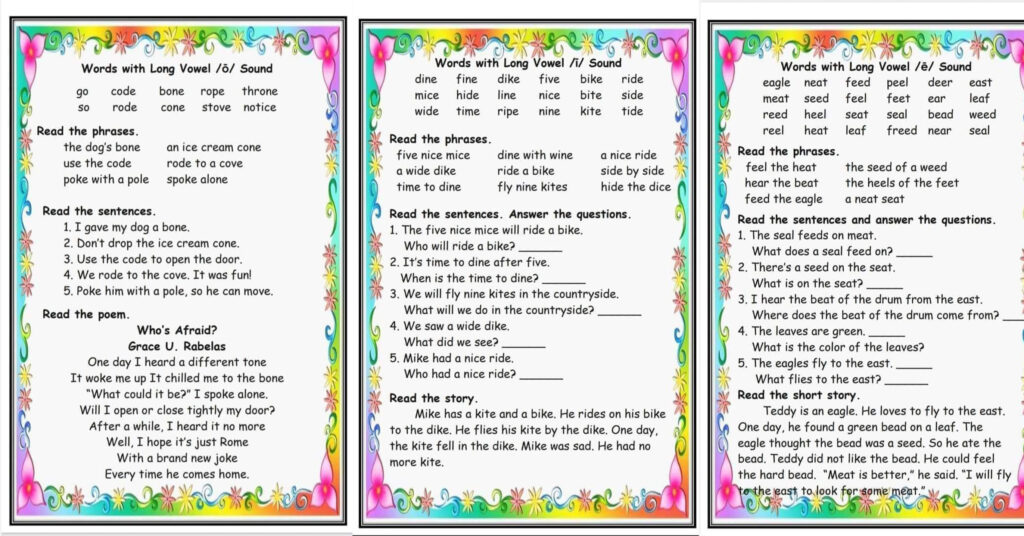
The sample materials you shared are excellent examples of beginner-friendly phonics practice. They focus on long vowel sounds and present learning in a very helpful sequence. First, children read a list of target words. Next, they read short phrases. Then they move to sentences, questions, stories, and even a poem. This step-by-step format gives learners many chances to practice the same vowel sound in meaningful ways.
These printable reading worksheets are useful for kindergarten pupils, Grade 1 students, Grade 2 learners, struggling readers, and children who need extra phonics review. They are also helpful for parents, teachers, tutors, and homeschool families who want ready-to-use reading resources.
If you are planning to post educational materials on your website, long vowel reading worksheets are a strong choice. They are practical, evergreen, and highly valuable for early literacy instruction.
What Are Long Vowel Reading Worksheets?
Long vowel reading worksheets are phonics materials that help children practice words where the vowel says its name. These worksheets often focus on one long vowel sound at a time, such as long o, long i, or long e.
For example:
- Long o words may include go, code, bone, rope, stove, and throne
- Long i words may include dine, fine, kite, ride, and time
- Long e words may include eagle, seed, feet, bead, leaf, and seal
These materials are effective because they group similar words together. Children can hear the repeated sound, notice the spelling pattern, and practice reading it in different forms. This makes phonics learning easier and more organized.
Why Long Vowel Practice Matters
Long vowel sounds are a major part of reading development. Once children master short vowels, they need to learn that vowels can also make their name sound. This helps them read a much wider range of words.
Long vowel practice matters because it helps children:
- decode unfamiliar words more accurately
- recognize spelling patterns
- improve pronunciation
- read sentences more smoothly
- understand phonics rules in real reading
Without enough practice, many learners confuse short vowel words and long vowel words. However, when they see repeated examples in structured worksheets, the difference becomes easier to understand.
Why These Reading Materials Are Effective
The materials in your sample work well because they use a complete learning sequence. They do not stop at word lists. Instead, they guide children through several levels of practice.
Children begin with target words, which helps them focus on the sound pattern. After that, they read phrases, which show how the words can work together. Then they move to sentences, where the words appear in more natural reading. Some pages also include questions, short stories, and a poem. This makes the lesson richer and more meaningful.
This format is effective because children need more than isolated word reading. They need to see how phonics patterns work in real text. These materials do that very well.
Another reason these worksheets are strong is readability. The print is large, the page is neat, and the sections are easy to follow. That helps young readers stay focused.
Long Vowel Reading Worksheets